[ FZ / Case study / OP-002 ]
E-commerce Engineering
From platform migration to a custom-built personalization and inventory system.
- Period
- 2026 — PRESENT
- Platform
- Shopify
- Previous platform
- PrestaShop
- Focus
- Personalization and inventory
OP-002
01 / Overview
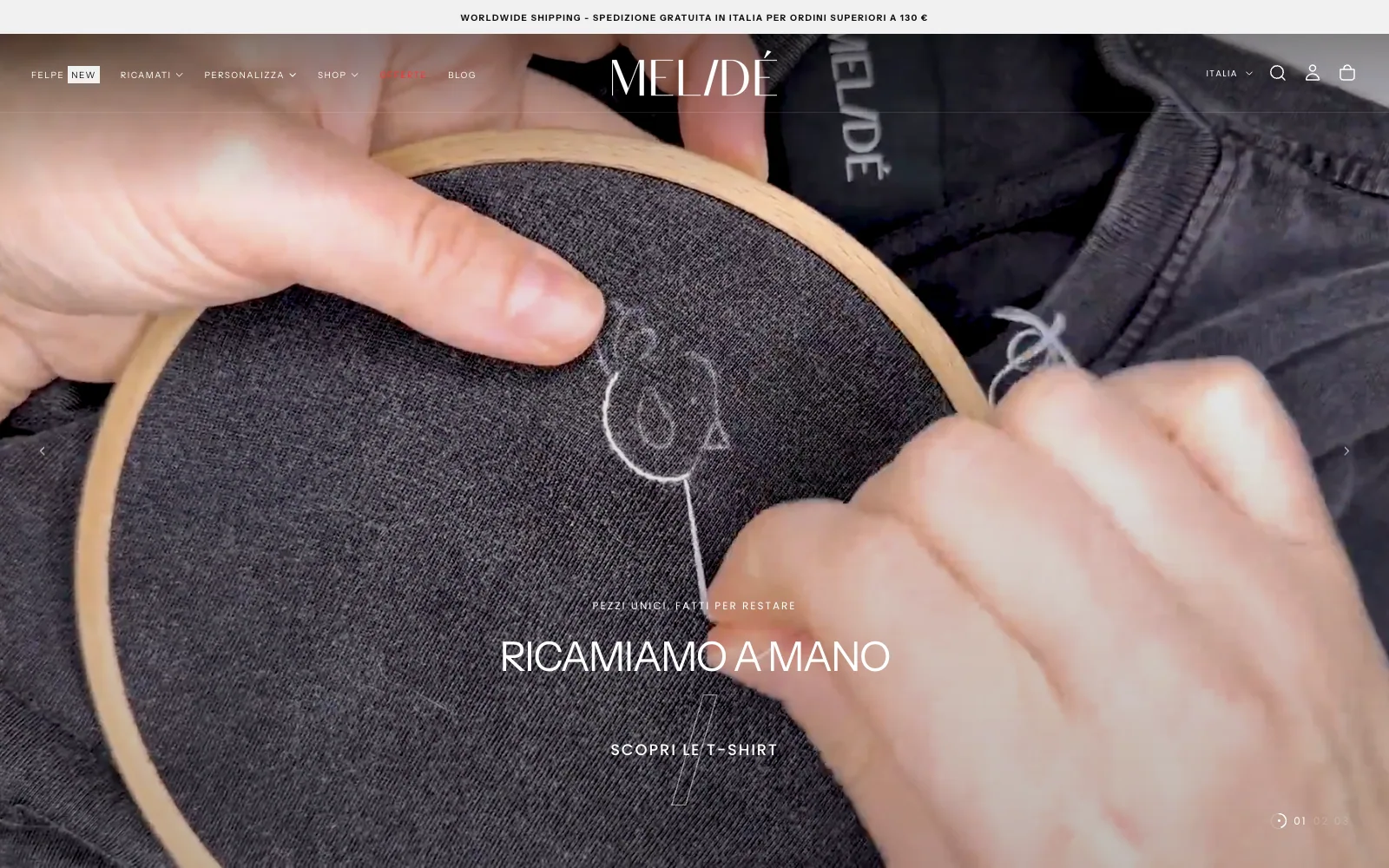
Melidé is a fashion business built around personalized apparel. Embroidery is part of the garment the customer composes.
In 2026 the shop moved from PrestaShop to Shopify. FOURTYOZONE led the technical transition: storefront engineering, the personalization infrastructure, and the operational handoff. Once the migration was complete, and after the previous database had been backed up, the PrestaShop installation was decommissioned. The backup lets the client retrieve historical data if it is needed.
FOURTYOZONE designed the catalogue architecture and the operating procedures, and guided the Melidé team through product setup and day-to-day catalogue management.
02 / The challenge
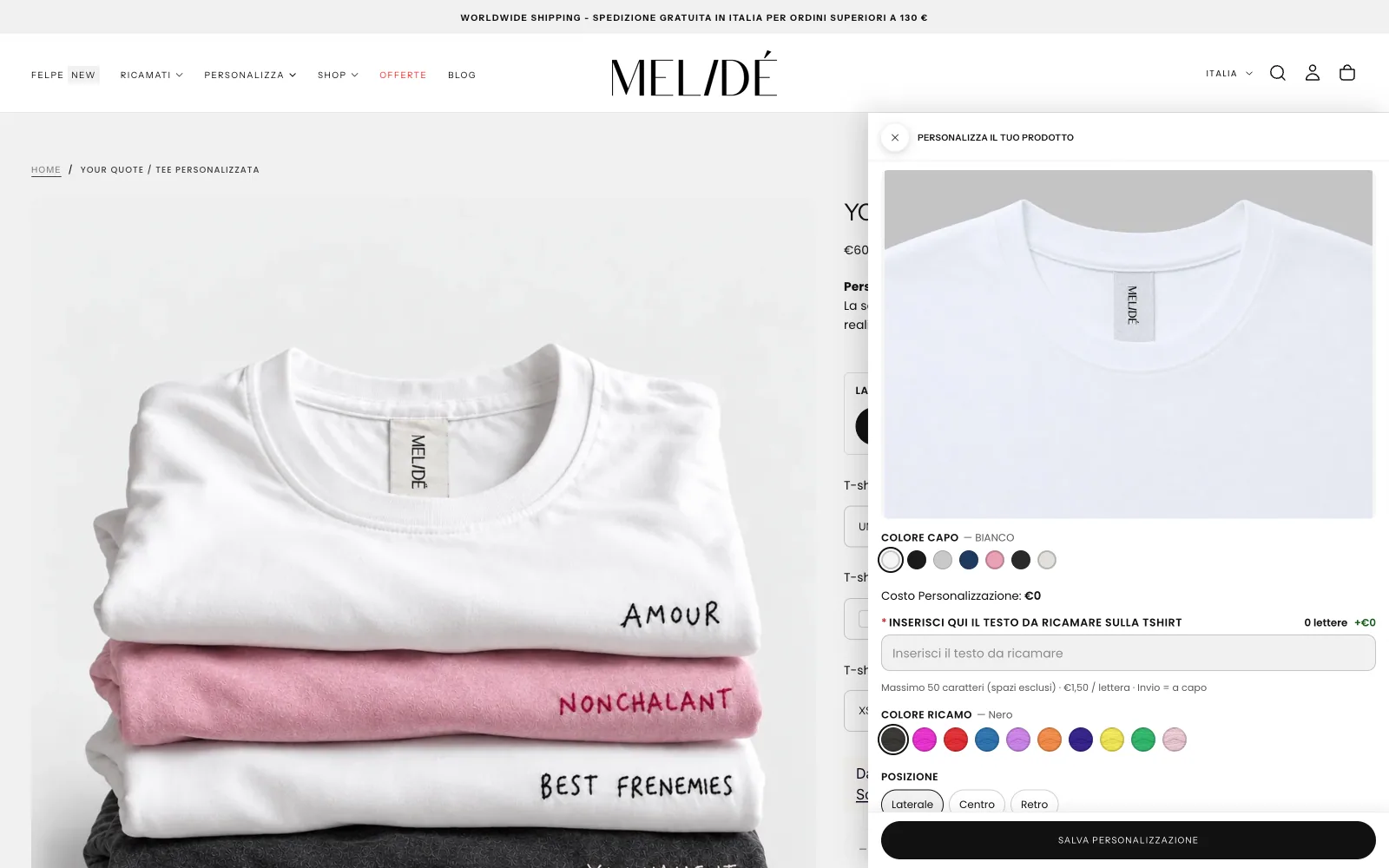
The shop's value sits in the personalized garment. Moving the catalogue meant keeping one workflow intact: the customer's text, the thread colors, the embroidery positions, the available fonts, the product preview, and a price that follows the number of characters.
The same raw materials serve many products. Availability had to stay in one place, rather than as a separate stock count on every garment.
The migration had to hold those requirements together and leave the Melidé team with a clear way to keep configuring products.
03 / The approach
Shopify carries the commerce layer: catalogue, variants, and inventory. On top of it, FOURTYOZONE built the personalization layer and the workflows embroidery requires.
The storefront was customized extensively where the embroidery experience, the cart, and the order documents had to follow that logic.
The configuration is reusable. The Melidé team sets up a personalized garment through the same procedures, without rebuilding the behavior for every product.
04 / Engineering & execution
The public embroidery experience collects the text, the thread color, the placement, and the font where the garment supports one. It shows a preview on the product, checks the characters, and confirms that the variant is available.
Embroidery pricing follows the number of characters. The supplement stays with the garment, in the cart and in the price the customer sees.
Shared raw materials are centralized. Several commercial products draw on the same components, and availability stays in one place.
A garment does not enter the cart when required personalization is incomplete.
The details the customer chose remain on the order, in the notifications, and in the documents.
The same work brought product presentation, size guides, and composition into line with that shopping flow.
Classified
Proprietary implementation details
Certain technical and operational details are intentionally undisclosed to protect the client's proprietary knowledge and confidential information.
05 / Outcomes
The Shopify storefront is running in production. Custom embroidery personalization is operational, and shared raw-material availability is centralized.
Product configuration is reusable. The Melidé team manages garments with the procedures that were defined, without rebuilding the logic for each item.
Personalization data travels with the cart and remains on the order, in the notifications, and in the documents.
Technology stack
- PrestaShop Migration
- Shopify
- Product Customization
- Custom Development
- Integrations
- Automation